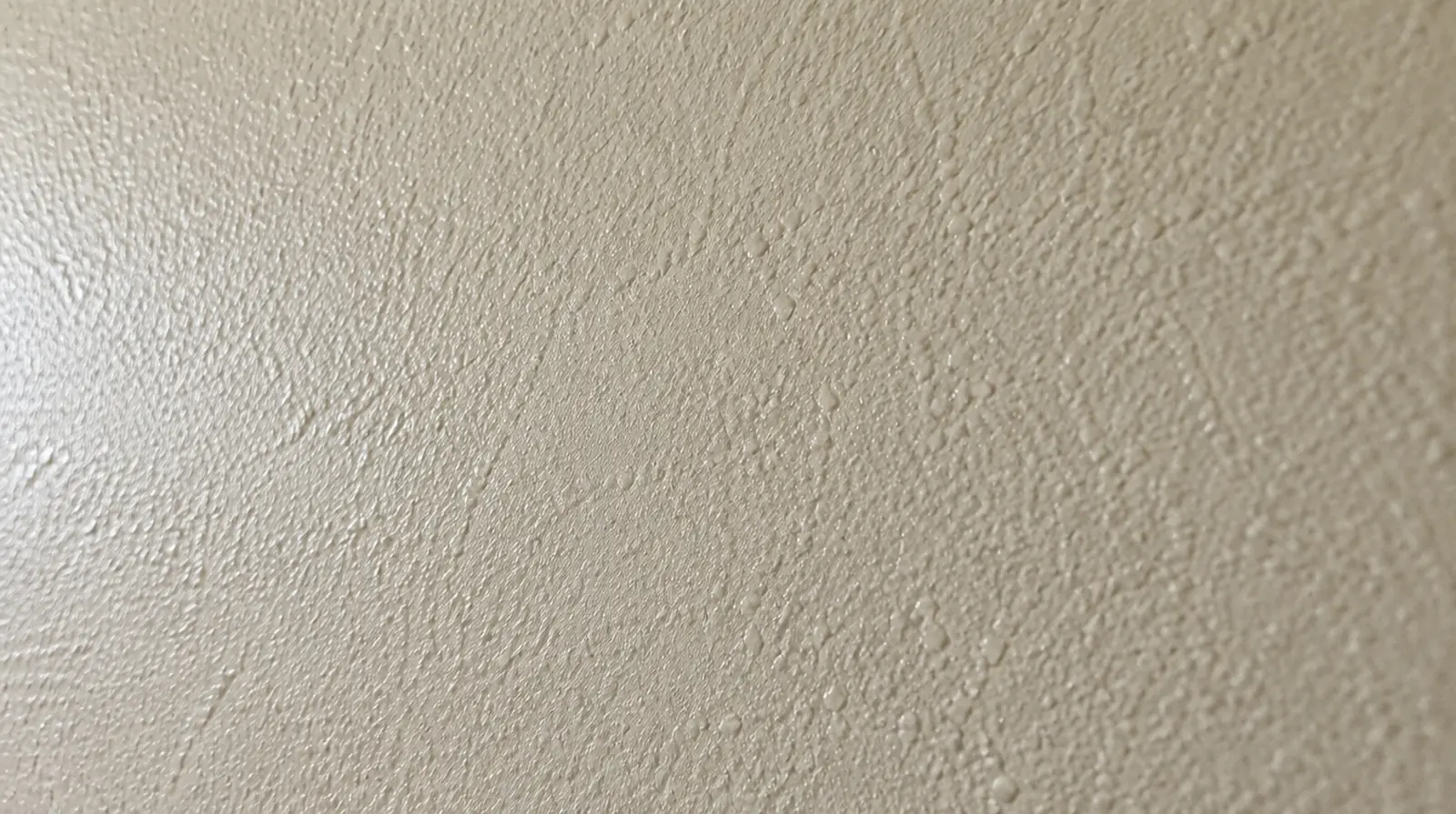
Check the underlying repair
A matching texture cannot hide a raised patch edge or a panel that sits proud of the wall. The base repair should be flat and firmly bonded before a decorative pattern is added. If the proposal requires return visits, identify the purpose of each stage and the intervals during which finishing material needs to remain undisturbed.
Control application conditions
Spray settings, material consistency and working distance all influence the resulting texture. A knockdown pass also depends on when the applied material reaches the right condition in that room. Where a future fixture will be installed, coordinate any required backing while the cavity is accessible instead of reopening the completed wall.
Consider hand applied surfaces
For a troweled pattern, the tool movement and the spacing between its marks matter. A sample is especially helpful when the original finish was created without a regular sprayed pattern. Where a surface has been painted many times, consider whether differences in texture or sheen will require a wider decorative treatment.
Judge from normal positions
Assess the dried texture from everyday viewpoints rather than judging only a close view of a wet sample. Include side lighting and the planned decorative paint sheen when deciding whether the result meets the agreed scope. If the surface condition is uncertain, allow for an assessment that can distinguish stable material from layers that should never be covered.
Identify the existing pattern
First determine how the current texture creates its pattern and relief. The existing wall should be examined in the actual room lighting before selecting a matching method. When the history of a repair is uncertain, note when it became visible and whether its appearance has altered across differing seasons.
Set realistic blend expectations
An exact invisible match is not always possible on a weathered or repeatedly painted surface. If local matching remains obvious, discuss whether a wider surface treatment would be preferable. While a removed panel exposes the wall cavity, complete the necessary review of concealed work before replacement board closes the opening.
Prepare a sample area
A small test helps establish particle size, spacing and the amount of flattening needed. Reviewing the sample before coating the full repair reduces uncertainty about the expected blend. If there is a fixed move in date, reserve adequate time for the coating stages after drywall work rather than counting only the installation period.
Allow time before painting
Let a new texture become ready for decoration rather than applying paint onto soft material. Establish whether the proposal includes that decorative stage or hands the surface over to another trade. For a distinctive existing pattern, retain a reference sample or detailed picture to make the matching discussion more specific.
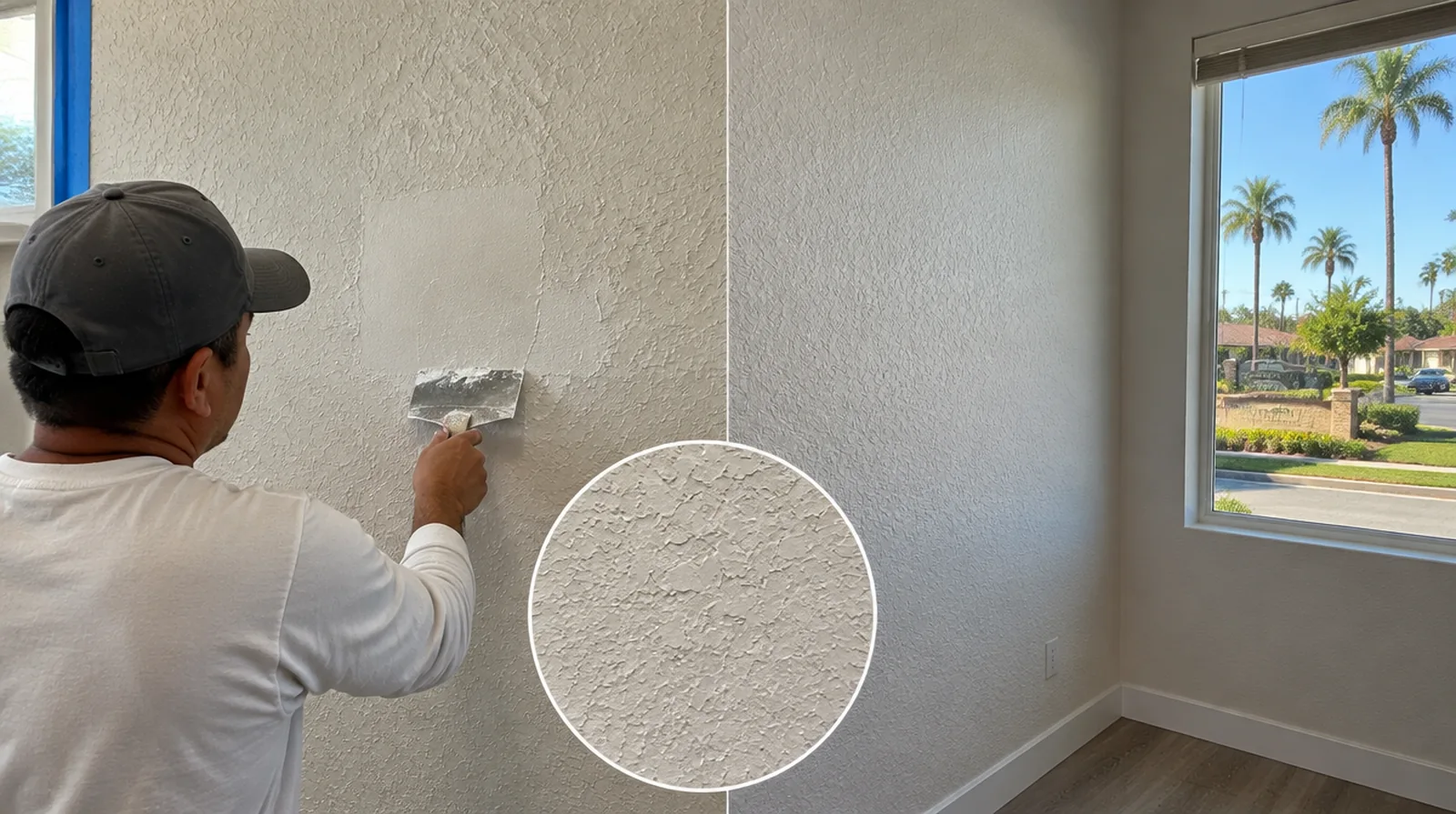
Study the paint layers
Older paint coats may have filled or rounded the original texture profile. Matching the wall as it looks now could call for a distinct application from the pattern that was first installed. If the original finish is unusual, keep a small reference sample or a close photograph to support the discussion about blending and restoration.
Protect surrounding finishes
Texture overspray can settle on trim, flooring and nearby fittings if they are not masked. Protect the full reach of the operation, including fittings and trim beyond the original damaged spot. For a project involving a building manager, confirm access hours and protection requirements before promising a start date or a short completion window.
Project context in Garden Grove
If the room stays occupied, choose a practical place for furniture and define which route remains open during work. Decide in advance whether a separate painter is responsible for the complete wall or only the repaired section.
Scope questions before finishing
For a planned new wall mounted fixture, resolve its backing requirements while the cavity remains open instead of cutting into completed drywall later.
For a project with several trades, agree which inspection or handover point must happen before the next person starts work.
For a room that stays in use, set a workable boundary around construction while retaining the access people need for normal daily activities.
When comparing competing estimates, make sure their protection, surface finish and disposal allowances describe equivalent work before comparing the final prices.
Where occupants have dust sensitivity concerns, agree containment and cleaning measures before settling the way the room will be staged.
If the ceiling or wall includes fittings, identify the person responsible for removing and reinstalling each item before the work begins.
For a tightly furnished room, plan temporary storage and the minimum working clearance before material is carried into the property.
In a room with little free floor space, identify temporary storage for belongings and establish sufficient clearance for the work before delivery.
When the wall has strong reflected light, look at the full plane rather than judging only the narrow strip immediately beside the patch.
When the work area includes a doorway, check the clearance for panel movement as well as the amount of space available for finishing tools.
If the coating stability is unclear, assess which layers are adequately bonded and which should be removed rather than simply hidden beneath new material.
Where light reflects along the wall, inspect the complete plane instead of limiting the review to the edge immediately next to the repaired section.
Explore the Garden Grove drywall overview for related options, or read the project planning information before arranging the next stage.
More planning details for Garden Grove
A Garden Grove living room repair may be seen most often from the entry rather than directly in front of the damaged spot. Include that viewpoint when discussing how far the finishing blend should extend. Old paint layers and a subtle texture can matter as much as the patch dimensions, so keep the decorating plan connected to the surface assessment.