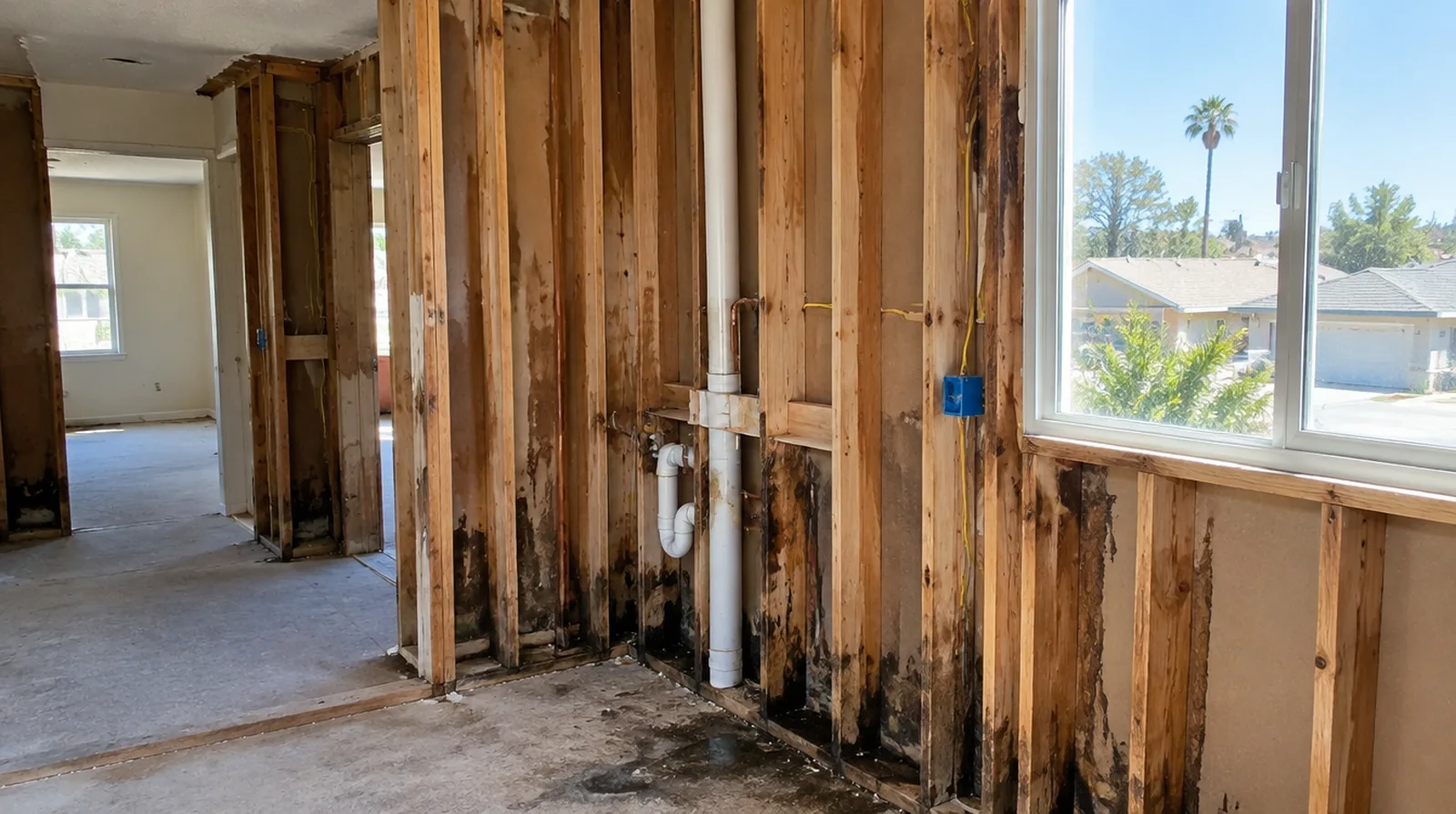
Match the board assembly
Replacement board should suit the current thickness and any applicable wall or ceiling assembly requirements. Changing to a moisture resistant board does not excuse leaving the original water problem unresolved. If a room has only limited ventilation, discuss how the finishing materials can dry without disrupting comfort or spreading dust elsewhere.
Rebuild supported edges
The new board section must connect firmly to suitable backing or sound framing. A stable repair perimeter helps avoid later cracking where replacement board meets the original surface. When building management controls access, agree delivery hours and common area protection before committing to a start or finish date.
Agree on decorative boundaries
Restoring the gypsum and achieving a consistent painted room finish are not automatically the same scope. Discuss a larger painting boundary if local decoration would leave a conspicuous difference around the patch. If access passes through a shared space, arrange protection and a delivery route that do not unnecessarily obstruct other occupants.
Define selective removal
A planned removal area opens the assembly for evaluation without automatically stripping every adjacent surface. Choose its edge to allow supported replacement and a surface transition that can be blended effectively. Where several contractors share the renovation, identify the inspection and handover milestones that determine when each following stage can proceed.
Assess material condition
Staining, swelling, softened edges and loose paper help determine which panels could need removal. The affected material behind the finish may extend past the stain seen from inside the space. For a room with restricted airflow, plan drying conditions alongside dust protection and the comfort of people occupying neighboring spaces.
Keep contamination separate
Flood water and suspected microbial growth require evaluation beyond ordinary cosmetic patching. Ask an appropriate remediation professional about containment and material handling before drywall work is scheduled. If a room has only limited ventilation, discuss how the finishing materials can dry without disrupting comfort or spreading dust elsewhere.
Treat remaining discoloration
An old dry mark may bleed through new decoration unless an appropriate primer is selected. Confirm that the stain is inactive before choosing a coating system for the repaired surface. For a surface carrying numerous paint layers, discuss whether differences in the retained profile or sheen justify decorating a broader area.
Inspect concealed components
Insulation, electrical work and plumbing exposed during removal may require separate assessment or replacement. Resolve the condition of exposed insulation, wiring and plumbing before closing the wall. When damage followed other building work, describe the nearby alterations and the sequence between those changes and the first visible defect.
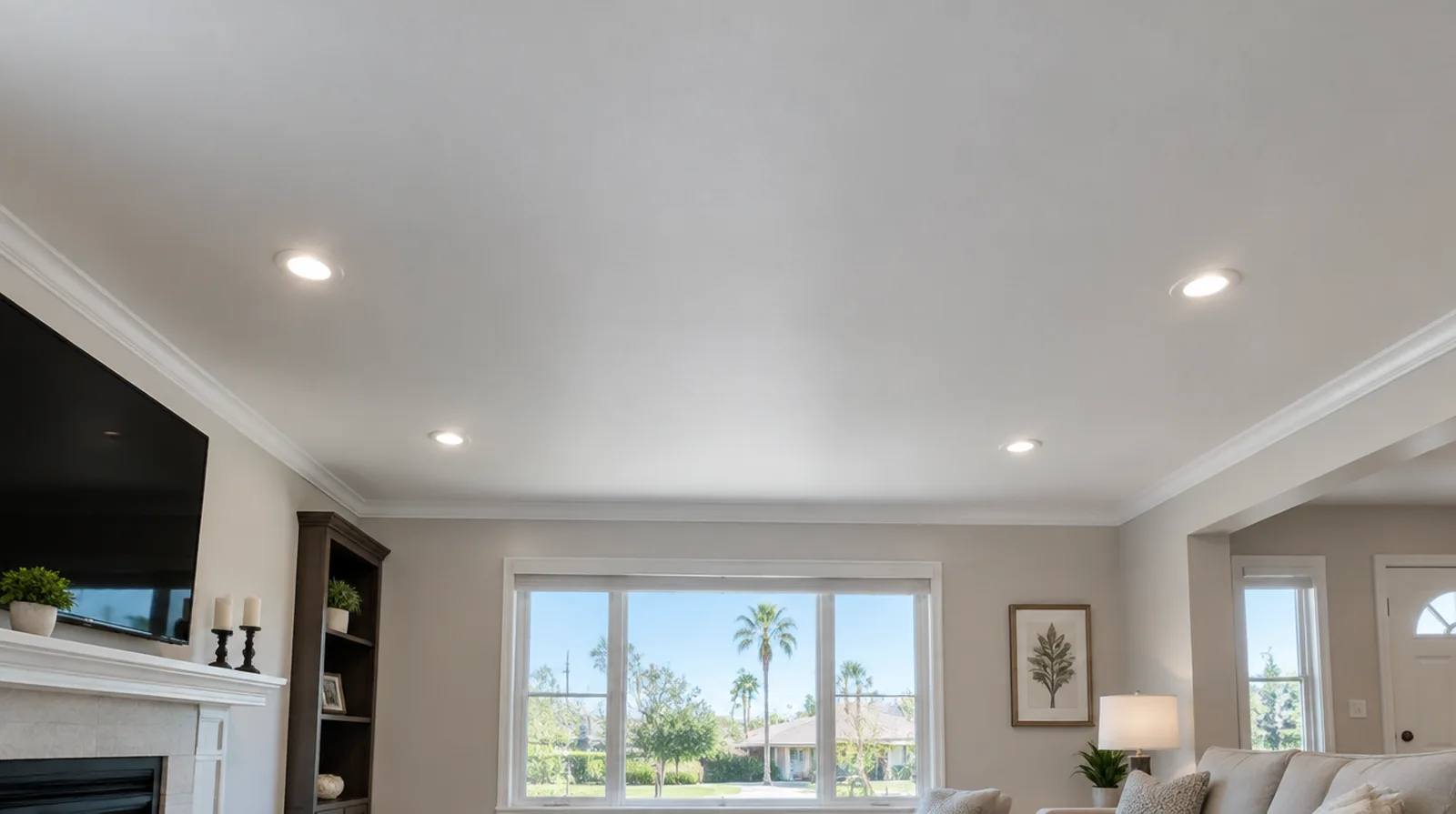
Finish after moisture control
Tape and drywall joint compound belong on stable dry material rather than a damp or deteriorating substrate. Give each finishing layer time to dry rather than trapping dampness under additional material. At an edge beside built in furniture, state whether the obstruction will be removed or whether finishing stops at the section that can be reached.
Resolve the water source
Replacement drywall should follow correction of the leak, condensation or other source that caused the damage. A cosmetic cover will not stop water from entering the same assembly again. When damage followed other building work, describe the nearby alterations and the sequence between those changes and the first noticeable defect.
Project context in Garden Grove
A Garden Grove living room repair may be seen most often from the entry rather than directly in front of the damaged spot. Floor protection should follow material handling from the entrance to the repair.
Scope questions before finishing
For a project involving a building manager, confirm access hours and protection requirements before promising a start date or a short completion window.
If the original finish is unusual, keep a small reference sample or a close photograph to support the discussion about blending and restoration.
Where several contractors share the renovation, identify the inspection and handover milestones that determine when each following stage can proceed.
In a room with little free floor space, identify temporary storage for belongings and establish enough clearance for the work before delivery.
At the handover inspection, review the finish from ordinary room positions using the lighting conditions that were agreed for the work.
When painting is outside the proposal, describe the remaining decorative preparation clearly so another contractor can price that stage accurately.
If the surface condition is uncertain, allow for an assessment that can distinguish stable material from layers that should never be covered.
When a paint contractor follows the drywall work, define the surface condition being handed over and decide who handles any minor final touch ups.
For a tightly furnished room, plan temporary storage and the minimum working clearance before material is carried into the property.
For a wall receiving a decorative covering, provide its preparation requirements early sufficient for the drywall finish to support that product.
For a surface that will receive wall covering, share the product requirements early so the finishing stage supports the planned decorative treatment.
If access passes through a shared space, arrange protection and a delivery route that do not unnecessarily obstruct other occupants.
Explore the Garden Grove drywall overview for related options, or read the project planning information before arranging the next stage.
More planning details for Garden Grove
Include that viewpoint when discussing how far the finishing blend should extend. Old paint layers and a subtle texture can matter as much as the patch dimensions, so keep the decorating plan connected to the surface assessment. If the room stays occupied, choose a practical place for furniture and define which route remains open during work.